Home

VCA™

VCA™ Virtual Stores The VCA story Watch & try the demos Become a VCA Store Pioneer

E-commerce Store in 7 Days

7-Day Store Store + Apps Fully Managed

Digital TV-in-a-Box

Multimedia website Broadcasting platform Android TV-box app Streaming & studio YouTube · Instagram · X The AI inside

About us

About Olgoo Contact us Get started →

VCA™  ·  Virtual Stores

3D walk-in virtual stores. Don’t just shop online — go shopping.

VCA™ virtual stores let shoppers walk into real stores, streets and malls online — browse, discover and buy, just like in person. Every place gets its own Virtual Commercial Address.

3D virtual stores starting from $3,500

CIPO patent filed · now choosing our first pilot districts

VCA™ Virtual Stores at a glance

What it is
A 3D virtual shopping platform built from real shops, streets and malls. Shoppers walk in online, browse the shelves, tap a price tag and buy.
Devices
Any modern browser on a computer, phone or tablet — no app needed. VR headsets work too.
How long
A single store (VCA Storefront) in about 2 weeks. Streets and malls are planned with you as pilots.
Who it’s for
Store owners, business improvement areas (BIAs), landlords and mall operators.
What’s different
Stores sit beside stores on their real streets, so shoppers walk from one to the next — not one stand-alone showroom.
Price
Starting from $3,500 for a single virtual store (VCA Storefront). Streets, malls and districts are quoted with you.

The problem it removes

Online, every shop is just a search result.

A neighbourhood store online is one listing among thousands. It loses the foot traffic, the window-shopping and the character that brought people through its door — and shoppers lose the pleasure of finding what they weren’t looking for. VCA™ puts the place back: a real street, plaza or mall you can walk through from a phone or a headset, where every store is a door you can step through and every product is a tag you can tap and buy. Districts get their foot traffic back — online. Shoppers get serendipity back.

Three packages

One store, one street, or a whole district.

VCA™  ·  Virtual Commercial Address

VCA turns e-commerce from scrolling into walking in.

The vaulted, crowded aisle of a traditional bazaar
The bazaar
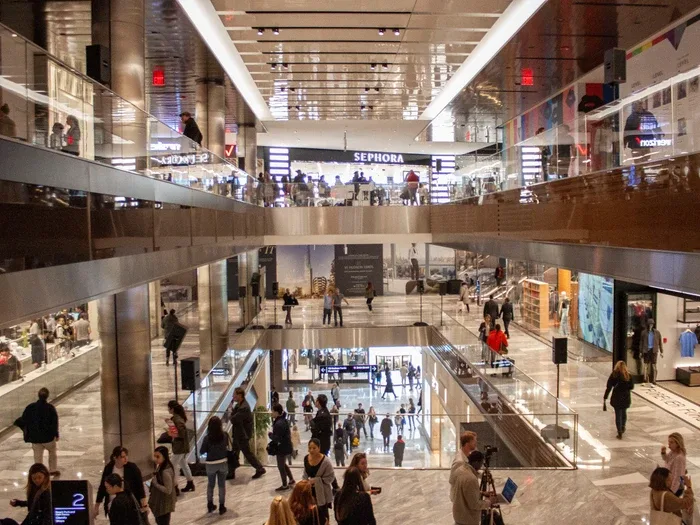
A multi-level modern shopping centre atrium
The shopping centre
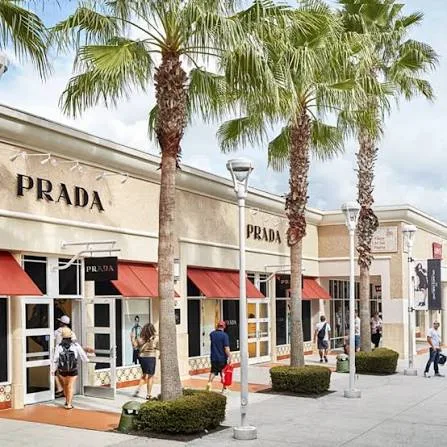
Palm-lined outdoor storefronts at an outlet centre
The outlet
A busy shopping street lined with store banners
The high street

VCA — Virtual Commercial Address — brings back what e-commerce has lost: the vibe of a shopping district, the closeness of stores, discovery, serendipity, and even nostalgia. Instead of searching for exactly what you already know you want, you can virtually arrive at a real commercial district or shopping centre, wander through it, notice stores you weren’t looking for, step inside, discover products, and buy — much as you would in the physical world.

VCA is more than a single virtual store; each store is a destination within a much larger spatial commerce network. We’re putting place, proximity and accidental discovery back into e-commerce — creating the bridge between physical commerce and e-commerce.

The bridge between physical commerce and e-commerce.

Watch VCA — Vision & Prototype Overview (2:38 min)

E-commerce made shopping extraordinarily efficient. But in doing so, it removed something fundamental.

Place.

In the physical world, you don’t always begin shopping by knowing exactly what you want. You go somewhere.

You walk down a street, through a shopping centre or a market You notice another store Something in a window catches your eye You remember a place you used to visit You discover something you never would have searched for

That is serendipity, and today’s e-commerce largely eliminated it.

VCA adds the place back to e-commerce —

along with its feeling, its vibe, its nostalgia, its serendipity, and the incidental shopping that comes with simply being there.

A Virtual Commercial Address gives a physical commercial location a corresponding destination in the digital world.
Instead of
  1. Search
  2. Results
  3. Product Page
  4. Checkout
VCA enables
  1. Arrive
  2. Walk
  3. Explore
  4. Discover
  5. Enter
  6. Shop
  7. Buy

A shopper could virtually arrive at a shopping district, move through its streets or corridors, enter stores, see merchandise in context, receive product and pricing information as they approach items, and purchase them — while preserving the geography, proximity and character of the real commercial environment.

A store isn’t an isolated 3D website.

It exists beside another store, which exists beside another store, inside a shopping centre, market or commercial district.

That relationship between places is part of the product.

Why now?

360° imaging, Gaussian splatting, browser-based 3D rendering, modern mapping, cloud delivery and AI are reaching a point where real commercial environments can be digitized and made interactive without constructing traditional game-like virtual worlds from scratch.

VCA provides the layer that connects those environments into commerce.

The physical environmentprovides the place.
VCAprovides the address and spatial connection.
Merchant dataprovides the products, prices and inventory.
The commerce layerprovides the transaction.

The vision

Today every business — down to each individual branch of a chain store — is expected to have a physical address, a telephone number and a web presence. We believe that businesses located in a community, district or shopping centre with a vibe of its own will soon have one more identifier: a Virtual Commercial Address (VCA).

A consumer searching for a business will gradually start noticing a new identifier in the Google search snippet:
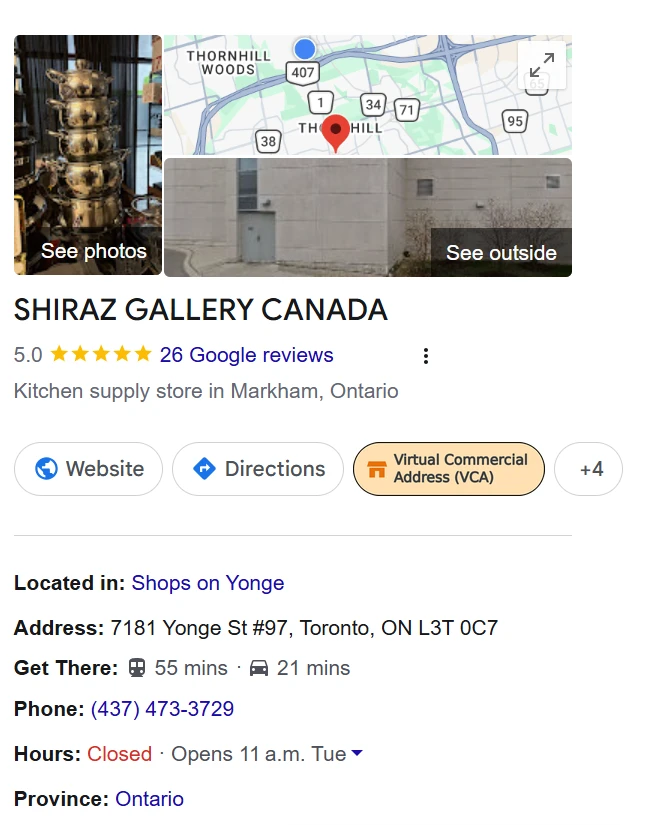
Mock-up of a Google business snippet for a Toronto store showing a Virtual Commercial Address (VCA) button next to Website and Directions
Your business
Physical Address
Telephone
Website
VCA — Enter Virtual Location

Clicking the VCA doesn’t merely open another webpage.

It takes you there.

And once places become connected, the Internet gains something e-commerce has never really had:

neighborhoodsproximitywanderingatmosphereserendipity

We’re not trying to make another way to look at products online.
We’re trying to put the experience of going shopping back into e-commerce.
The Internet changed how we shop.

We’re about to change what it means to shop online.

For decades, e-commerce has asked the physical world to fit inside websites, search boxes and product lists.

We believe there is another possibility.

A way for the richness of real-world commerce — its places, neighbourhoods, discovery, character and unexpected finds — to become part of the digital world.

Not another marketplace Not another directory Not simply a virtual store

Something much bigger is taking shape.

A new layer connecting physical commerce with the digital economy — designed to make entirely new shopping experiences, services and commercial ecosystems possible.

We call it

VCA™

The physical and digital worlds are about to get a lot closer.

CIPO Patent filed
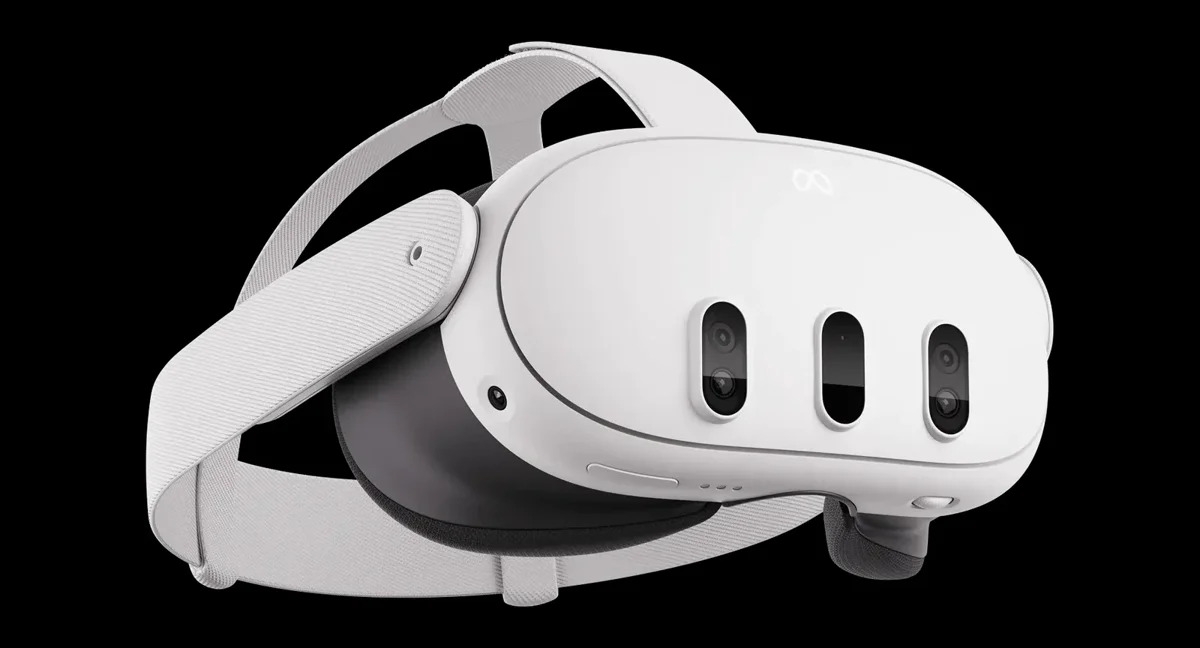
A white VR headset
VCA + VR headset:
Don’t just shop. Go shopping

Watch & try

See it. Then walk it yourself.

For real store implementations, contact us. Contact us

Questions

Frequently asked

What is a 3D virtual store?

A 3D copy of a store that shoppers can walk into online, browse and buy from. With VCA, each virtual store also sits on its real street or in its real mall, next to its neighbours.

Is this a virtual tour of my store?

It starts like one: your store is captured in 360° and 3D, like a retail store virtual tour. The difference is that customers can shop it — tap a price tag, add to the basket and check out — and walk next door to the neighbouring stores.

What is a Virtual Commercial Address (VCA)?

A destination in the digital world that corresponds to a real commercial place — a street, mall or store — so people can arrive online, walk through it, step into stores and buy.

How is VCA different from other virtual stores or a 360° tour?

A tour shows one place, and most virtual stores stand alone; VCA connects places. Stores sit beside stores on real streets, and every product can be tapped and bought — it’s shopping, not just a view.

Do shoppers need an app or a VR headset?

No. VCA runs in any modern browser on a computer, phone or tablet. VR headsets work too, and on a big screen it’s even better.

Who can join a VCA pilot?

Store owners, business improvement areas (BIAs), landlords and mall operators. We’re choosing our first pilot districts now.

Is VCA patented?

A patent application for VCA has been filed with the Canadian Intellectual Property Office (CIPO). VCA™ is a trademark of Olgoo Enterprise Services Inc.

How long does it take to set up a virtual store?

About two weeks for a single store with VCA Storefront. A street, plaza or mall is planned with you as a pilot.

How much does a virtual store cost?

A single walk-in virtual store (VCA Storefront) starts from $3,500. Streets, malls and founding districts are quoted with you, based on their size.

How do shoppers buy in a VCA virtual store?

They walk in, tap a product’s price tag and add it to the basket, then check out online.

Become a pilot

Put your street on the map that walks.

Tell us about your store, street or mall. We’ll come back with what a VCA pilot would look like for you — what we’d capture, when it could go live, and what it costs.